Your cart is currently empty!
Blog
-
RCEP will hurt local industry and allow workers’ exploitation, says civil society
Copy of Article on Down to Earth
The trade agreement is being negotiated in secrecy, but it is likely to favour big companies and threaten India’s agriculture, industry and e-commerce sectors
Negotiations over a proposed free trade agreement, Regional Comprehensive Economic Partnership (RCEP), will have severe impacts on the state of agriculture and manufacturing industries in India, and may allow for exploitation of workers and natural resources in India, civil society representatives say.
The 18th round of negotiations on RCEP is being held in Manila, Philippines among 16 countries that account for 50 per cent of the global population and 29 per cent of the world’s GDP. These include 10 members of the Association of Southeast Asian Nations (ASEAN)—Brunei, Cambodia, Indonesia, Laos, Malaysia, Myanmar, the Philippines, Singapore, Thailand and Vietnam—and six other countries having existing free trade agreements with ASEAN: Australia, China, India, Japan, South Korea and New Zealand.
Civil society representatives say that the agreement in being discussed secretively. “In the past four years and to this day, no text has been made available to members of the public, parliamentarians, civil society or media,” says Dharmendra Kumar, director of India FDI watch, a Delhi-based non-profit.
The agreement will considerably reduce import duties for a range of goods in agriculture, manufacturing and service industries, allowing foreign companies to compete with domestic counterparts. According to India FDI Watch, RCEP mandates import duties in the range of 0-3% for member countries. India’s current duty on industrial goods is 10 per cent at an average, and 32.5 per cent for agricultural products.
Allowing exploitation
“Reduction of import duties to promote global value chain will lead to mass layoffs, low wages and further exploitation,” says Gautam Mody, General Secretary, New Trade Union Initiative (NTUI).
“Global value chains thrive by exploiting workers who are paid low wages, tied to informal jobs with extreme job volatility, and offered no or declining social protection measures, all of which are necessary to ensure profits for the rich companies. RCEP undermines technological development in developing countries and hence does not work either for creating sustainable employment or for local value addition in developing countries” he adds.
Local agriculture, which is dominated by small and marginal farmers in India, will also feel the impact of the free trade agreement. K T Gangadhar, president of Karnataka Rajya Raitha Sangha (KRRS), a farmers’ organisation, says, “The ASEAN has already devastated our plantation workers. The RCEP will have even stronger impacts on agricultural jobs. Not only will RCEP extract further access in plantation products for ASEAN, it will threaten livelihoods in sectors like dairy, meat and other agricultural products by allowing duty free imports of subsidised products from Japan, New Zealand and Australia,” says Gangadhar.
Reduction of duty is likely to put India at disadvantage in its trade ties with China. “India has a large trade deficit (Rs 3.45 lakh crores in 2015-16) with China, which will increase after RCEP. Companies producing steel and heavy machinery have already raised the concern that this would lead to displacing of local manufacturing by Chinese imports,” Dharmendra Kumar says. Garment, ceramics and electronics sectors will also feel the pressure due to cheaper Chinese imports.
Upper hand for rich companies
Governments of developing countries will be restricted from making policies that regulate foreign investors, favour domestic industry, or change labour laws and wage policies, under the agreement.
“RCEP will include the infamous Investor-State-Dispute-Settlement Mechanism (ISDS) that allows foreign companies to challenge policies and judicial decisions in secret arbitration cases,” says Adil Shariff, additional general secretary, Indian National Municipal and Local Bodies Workers Federation.
He explains the implication of the agreement, with example,“There are numerous cases, for example, between Veolia (French company) and Egypt, that show how foreign companies can challenge any change in labour laws (such as the Minimum Wages Act or maternity benefit provisions in India) as it increases in their cost of operation. In addition to the compensation demanded by companies, the litigation itself is financially devastating. In one case, Philippines had to pay US$ 58 million, which it could have used for the vaccination of 3.8 million children,” says Shariff.
E-commerce sector at risk
The e-commerce chapter in RCEP will impose binding rules that will force developing nations like India to give away data, a highly prized industrial resource, for free to big companies in Japan, New Zealand, Australia and China.
“This will seriously affect millions of small independent offline retailers and street vendors in India, as well as SME manufacturing sector workers as digitised products will compete with physical goods made in India”, says Dharmendra Kumar, who works with small retailers in India.
“The wholesale duty-free import of goods by e-commerce giants like Alibaba in China will threaten local products developed by SMEs and domestic job creation in those segments,” he adds.
-
ACORN at Long Last Wins battle at the Constitutional Court of Italy
This past Thursday the Corte Costituzionale – Supreme Court of the Italian Republic – wrapped up 6 years of enduring battle ruling in favor of our case against so called ‘black rents’.
Ever since ACORN International was founded in 2004 it had the goal of expanding his organizing operations throughout the globe, naturally dealing in each country within the frame of its particular issues and legislations. Its second chapter in the European Union after the Czech Republic was opened in Italy in 2011, and from the very beginning it started dealing with the widespread, longstanding plague of landlords renting out their properties without handing out regular contracts, but just blackmailing their tenants in a manner of “you either pay and ask for no right, nothing, or you’re out”.
The law protected such landlords simply because… there was no law, preventing them to do so, and so they got away with it. Until 2011.
Enter ACORN, and as we start our operations that very year a new national law comes into force that allows through a certain not-so-simple procedure the tenants to report their situation to a government agency and get, as reward and protection, a legal rent at a tenth of the monthly price and with all the righteous housing rights finally enforced. We as ACORN Italy provided all of the assistance to make that not-so-simple procedure simple and help the tenants – now our dues paying members – get the job done and the house secured.
Our success was unprecedented, we at the peak reached out and subscribed members nationwide, from the southernmost regione (state) of Sicily all the way up to the northernmost of Trentino Alto-Adige.
We caught the attention of the national press, the national government, both the House and the Senate and, of course, of angry tax-evading landlords who thanks to us could evade taxes no more, and bully (or much worse: the threats we received were numerous and of various kinds) our tenants-members.
Eventually we also caught the attenton of the Supreme Court of Italy which in march 2014 ruled against this law only because of a technicality while still calling it “revolutionary”, not the kind of word you’d normally expect from Supreme Court Justices.
That was true mayhem, meaning potentially and suddenly thousands of tenants homeless and having to pay back all the money ‘saved’ (skyhigh amounts at that point) and as ACORN Italy we managed in an unprecedented effort within two months only to have the President of Italy sign into law a safeguarding law that litterally saved all our members from going bankrupt and under bridges. Chaos didn’t end there, though: in july 2015 also the case for this law reached its Supreme Court hearing and this one was also struck down. Frustration and, quite frankly, despair came with it. We didn’t throw in the towel though, against all odds and advices, we stayed extroardinarily (desperately?!) Focused and at the very last minute of the last voting in the House, late december 2015, we managed to pass yet a new law that again reverted the situation in our and justice’s favour. At that point, everybody strongly doubted we could make it again and be heard, together with our members’ voices and the voice of equality, justice, fight against black rents and tax evasion.
Still, we managed, but as soon as early in 2016 yet again we were notified that our case had to be defended for a very final time at the Supreme Court. Where we certain to pull it off, after two straight losses? Hardly.
Did we get a verdict? Finally, yes, and finally a positive one… on an unforgettavble April 13th, 2017 the Supreme Court of the Italy gace it’s very final ruling and upheld our law, sealing positively a story that started with our foundation in Italy on September 12th, 2011.
We can safely say that ACORN Italy took the most relevant stand against the most relevant chunk of tax evasion as a whole in the history of the Italian Republic, and wether that’s ‘classical’ community organizing or just a slightly different form of it, we as an international community can well be extra proud of what we achieved, defended and now definitely won, and now can start thinking of our future, a new story to write, a next step in community organizing to take. Standing very well proud. Organizing people for power.
David Tozzo, Presidente nazionale ACORN Italy
-
Report from ACORN Kenya
ASSOCIATION OF COMMUNITY ORGANIZATIONS FOR REFORMS NOW
Mobile Contact: 0722592466, 0721338978
P.O. Box 6253-00200 Nairobi, Kenya
Email:Kenya@acornkenya.org or acornkenyatrust@yahoo.com
Website: www.acorninternational.com
PROGRESSIVE REPORT FOR THE MONTH OF NOVEMBER, 2016:
30th NOVEMBER, 2016
The country is fully in campaign mood 10 months before election with so many alignments and launching of different key positions by different politicians. The issues of corruption and misappropriation of funds being a key factor with blame game on both sides of opposition and the government.
On the other had the month of November, we held very health discussion with Eloise who has really been very useful in terms of helping us to be more focused on our organizing work.
Having done with the awareness campaign on the issues of children and drug abuse in all the villages, a select committee is set to meet next week to strategize on our major campaign scheduled to take place by the month of March next year 2017.
Meetings with those undergoing transformation processes took place on 3rd and 17th November respectively. Majority of those undergoing transformation processes availed themselves and their progress is quite encouraging.
On the other hand organizing has been going on well.
Membership Recruitment
VILLAGE
RECRUITED NEW MEMBERS
Korogocho Villages
7
Other areas of Karibangi
4
Total
11
Meetings
1. Membership meetings
VILLAGE
DATE
VENUE
ATTENDANCE
AGENDA
High ridge and neighboring villages
29th Nov, 2016 at 3.00pm -4.00 pm
Word of Hope Church Kariobangi
57
- Update on campaigns
- membership recruitment
- dues collection
Kisumu Ndogo and neighboring villages
25th Nov, 2016 at 3.00 pm. -4.00 pm
Word of Hope Church, Kariobangi
52
- Update on campaigns
- membership recruitment
- dues collection
Dues collection
VILLAGE
NO. OF MEMBERS
TOTAL IN KSHS
Highridge and neighboring villages
47 X Kshs. 50
13 X Kshs. 20
Kshs. 2,350
Kshs. 260
Kisumu Ndogo and neighboring villages
42 X Kshs. 50
12 X Kshs. 20
Kshs. 2,100
Kshs. 240
TOTAL
114
Kshs. 4,950
Dues collected will be used for the office rent.
Report by Sammy and David
ACORN Kenya Community Organizers
-
Report from ACORN Peru
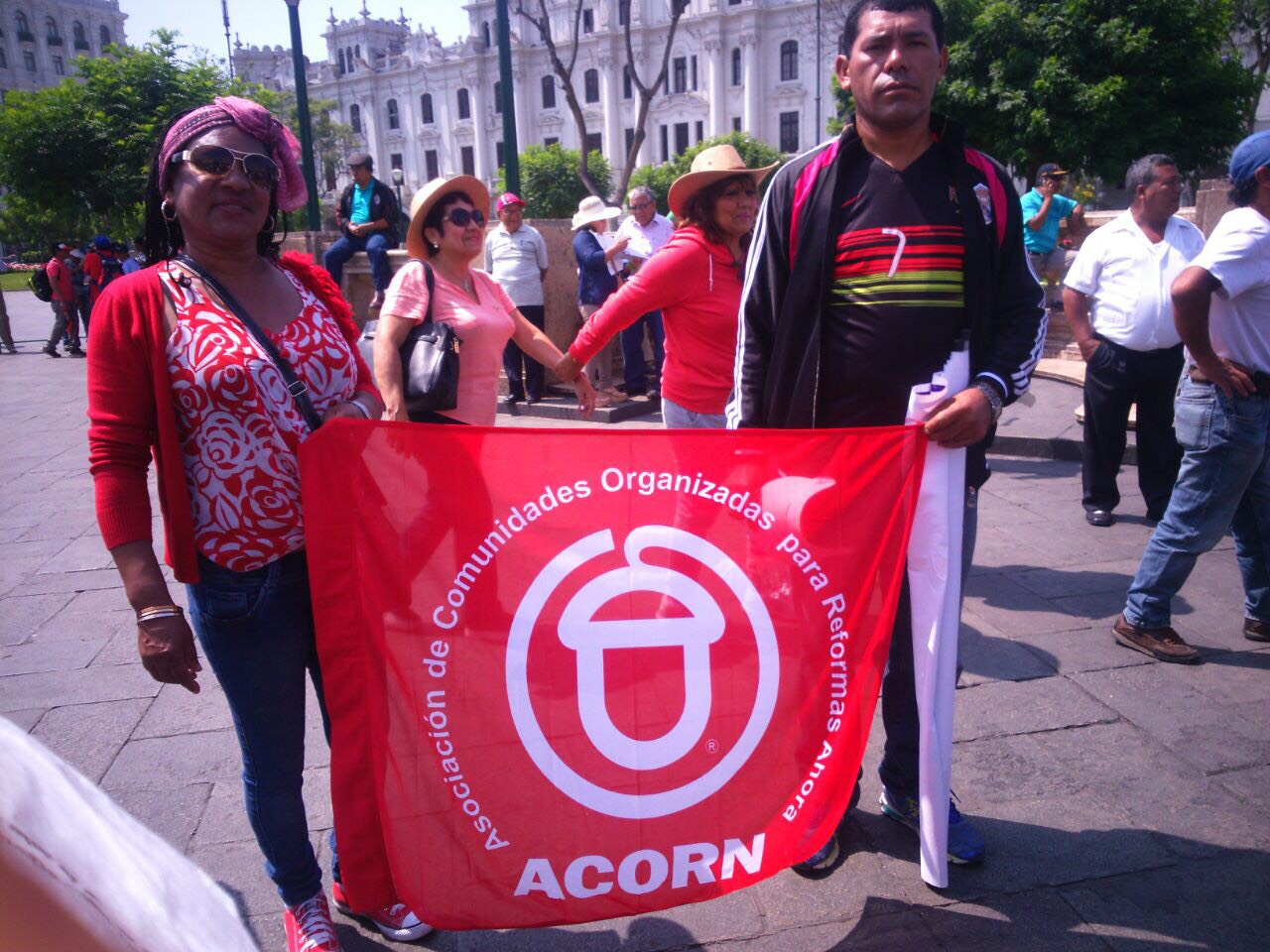


Informe Noviembre 2016
Por el presente hago llegar el informe de actividades
Realizados durante el mes de Noviembre 2016.
ACORN PERÚ, considerando el apoyo por las
Causa justa del pueblo; continuamos en la Campaña en Contra del
TPP y el TISA y no privatización del Agua,
Por los Derechos de las personas y el desarrollo de sus Pueblos.
Continúamos contribuyendo con nuestra participación en la educación
Y por Valores en colegios con los más pequeños.
Preparándonos para compartir fuera de Lima con los niños de nuestros Andes del
Perú.
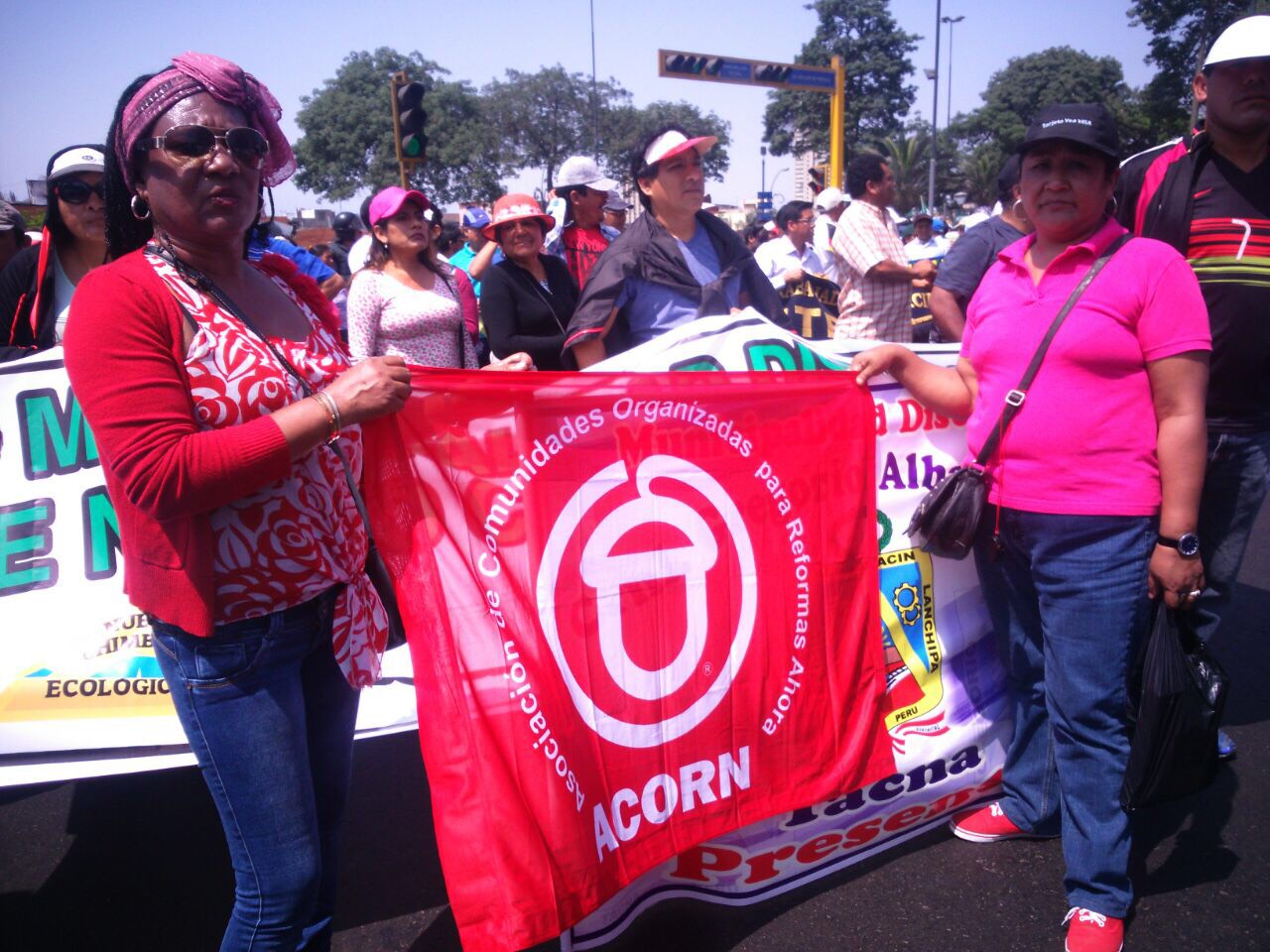
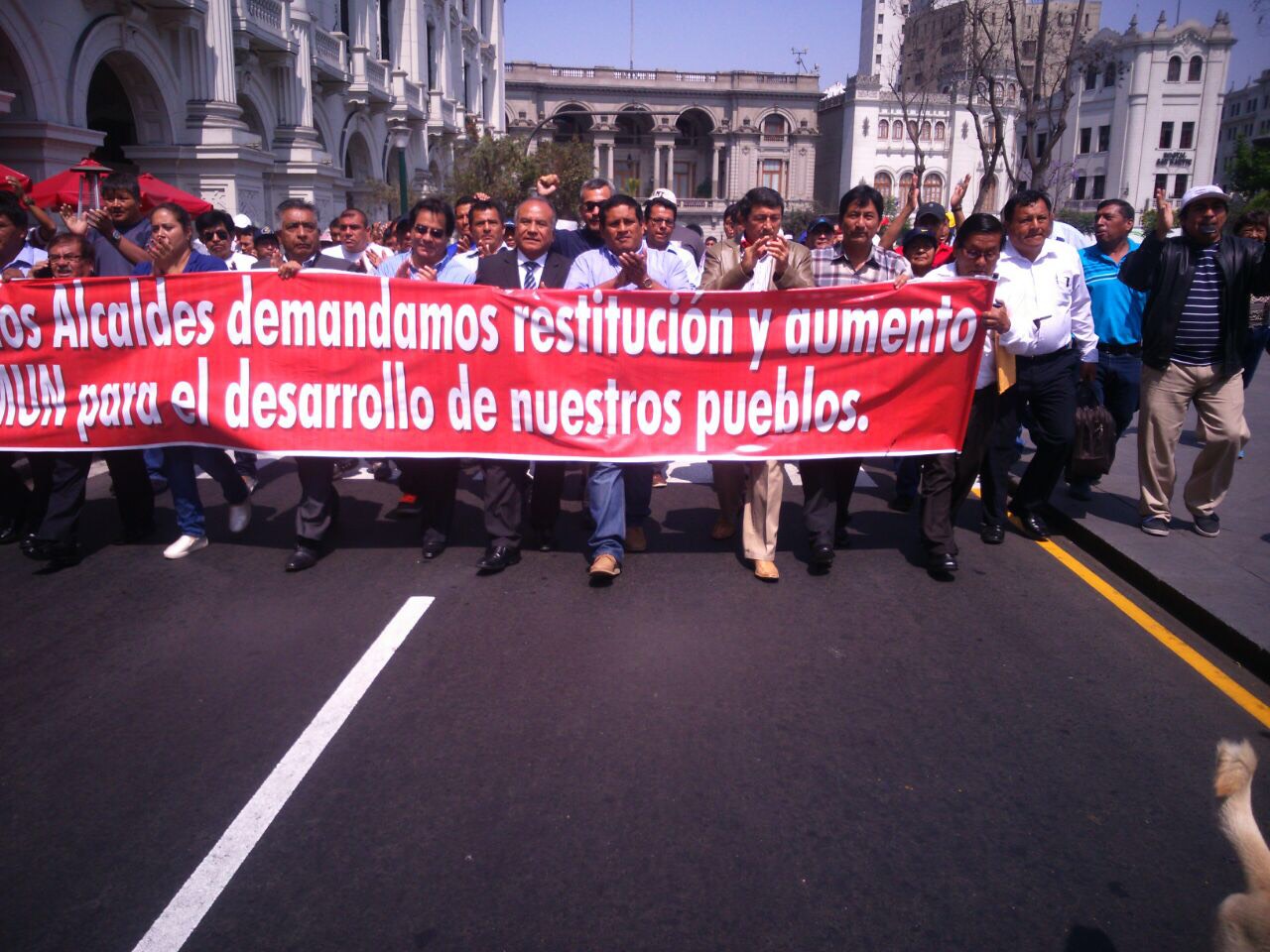
En esta oportunidad estuvimos con miembros de FETRAMUNP
En la Movilización en Lima el 24 de Noviembre del 2016, que movilizó
A muchas personas de los diferentes departamentos del país, en respaldo a los Alcaldes y
Regidores solicitando el aumento de Presupuesto Del FONCOMUN.Presupuesto que fue programado en mayo del presente
Año de 1468 millones de soles y gracias a esta movilización se ha conseguido que sea de 1609 millones de soles.
Este 29 de Noviembre del 2016 el Ministro de Economía y Finanzas (MEF).
Preciso que se asignarán:
318 millones para Infraestructura Social y Productiva.
563 millones de soles para Proyectos de Saneamiento y Urbanismo,
412 millones de soles en el marco de incentivos de la Gestión municipal
316 millones de soles por concepto de otras transferencias.
“POR LO QUE SIEMPRE DIREMOS Y RECORDAREMOS SIN LUCHAS, NO HAY
VICTORIAS”
“EL PUEBLO UNIDO JAMÁS SERÁ VENCIDO”